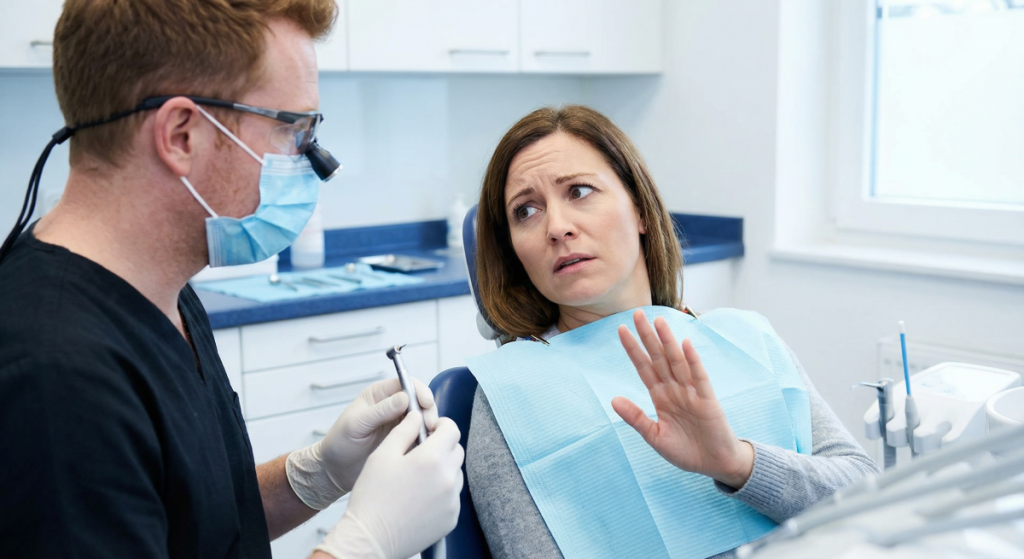
If you are scared to go to the dentist after 10 years, the most clinically sound approach is gradual exposure, starting with simple check-ups rather than complex procedures. Long-term avoidance of dental care, often driven by intense dental anxiety or dentophobia, directly leads to severe gum disease, rampant tooth decay, and potential tooth loss.
To safely return to care, it is crucial to find a dental anxiety dentist near me who utilizes open communication, behavioral coping mechanisms (like hand signals and music), and professional sedation options (such as nitrous oxide or oral sedation) to manage your fear in a strictly judgment-free environment.
Breaking the Decade-Long Cycle of Dental Avoidance
Walking through the doors of a dental clinic after a decade away can feel like an impossible task. If you are scared to go to the dentist after 10 years, you are likely battling a complex mixture of deep-seated fear and compounding embarrassment. At Yonge Wellesley Dental, centrally located in Downtown Toronto near Yonge St, Bay St, and Dundas Square, we want to assure you that your reaction is a recognized clinical condition, not a personal failing.
For patients suffering from dentophobia, an intense, irrational fear of dentists affecting roughly 9-20% of the population, avoidance is the brain’s natural defense mechanism against perceived trauma. However, this avoidance creates a vicious cycle where oral health deteriorates, increasing the fear of returning. Our clinical team specializes in breaking this cycle. This comprehensive guide will help you understand the clinical realities of long-term avoidance and outline a safe, step-by-step pathway to reclaim your oral health without judgment and without overwhelming stress.
Essential Insights for Your Safe Return to Dental Care
- Validation of Your Fear: Your fear is recognized scientifically as dentophobia or odontophobia, a condition deeply rooted in past trauma, fear of pain, or fear of needles.
- The Cycle of Shame: Avoiding care often leads to severe gum disease and tooth decay, which in turn causes patients to feel too embarrassed to seek help.
- No-Judgment Philosophy: Modern, compassionate dentistry prioritizes your emotional safety just as much as your physical health.
- The Power of Gradual Exposure: You do not have to fix everything on day one. Returning starts with simple check-ups rather than complex procedures.
- Clinical Sedation: Proven medical interventions, including nitrous oxide and oral sedation, are available to physically and mentally relax you during your visit.
Why Are You Scared to Go to the Dentist After 10 Years?
The initial trigger for dental anxiety usually occurs years before the avoidance begins. Understanding this timeline is crucial for forgiving yourself and moving forward.
Most cases of severe dental phobia originate from negative past dental experiences, often during childhood. If you were subjected to a painful procedure, or if you felt a profound loss of control while in the dental chair, your brain categorized the dental clinic as a place of trauma.
Over the years, this original fear is compounded by other common triggers:
- Fear of Pain: The anticipation that returning after so long will inevitably hurt.
- Fear of Needles: Many patients harbor an intense trypanophobia, terrified of the local anesthesia injection required for restorative work.
- Sensory Triggers: The distinct fear of the drill and clinical noises.
Eventually, the initial fear is replaced by shame. You may know that your teeth require attention, but the fear of being lectured or judged by a clinical professional keeps you paralyzed. Finding a compassionate dental anxiety dentist near me is the key to bypassing this shame.
What Are the Clinical Realities of Long-Term Avoidance?
It is important to address the clinical realities objectively. When you avoid the dentist for a decade, minor issues that could have been resolved with basic Preventive Dentistry often evolve into complex conditions.
The most common consequence of avoidance is the progression of severe gum disease periodontal disease. Without professional scaling to remove calculus (tartar) buildup beneath the gum line, the supporting bone structures begin to deteriorate. Furthermore, untreated cavities lead to severe tooth decay that eventually reaches the dental pulp, causing severe pain and necessitating extensive Restorative Dentistry, such as root canals or extractions. Ultimately, this trajectory leads to potential tooth loss.
While this sounds daunting, modern dentistry has advanced remarkably. Conditions that were deemed hopeless a decade ago can now be managed comfortably through Full Mouth Rehabilitation and advanced Dental Implants.
To learn more about how oral health deteriorates and the physical signs of fear, review our guide: What Causes Dental Anxiety and How to Recognize the Symptoms in Yonge and Wellesley, Toronto
How Does Gradual Exposure Help You Return?
The thought of sitting in the chair for hours of restorative work is terrifying. That is why we utilize a clinical psychological technique known as gradual exposure.
Gradual exposure involves starting with check-ups rather than complex procedures. When you contact our office, you can explicitly request a “consultation-only” appointment. During this visit, a routine dental exam in Yonge and Wellesley, Toronto serves merely as the foundation of preventive and diagnostic dental care.
We will simply evaluate oral health, identify concerns early, and guide appropriate treatment planning based on your individual needs. No needles, no drills, and no immediate treatment unless you are in acute pain and request it.
Comparison Table: Overcoming Mild Hesitation vs. Decade-Long Avoidance
Understanding the depth of your avoidance helps tailor your return strategy.
| Factor | Mild Dental Nervousness (1-2 Years Absent) | Severe Dentophobia (10+ Years Absent) |
|---|---|---|
| Primary Emotion | Mild guilt over missing cleanings; apprehension. | Deep shame, intense panic, feelings of loss of control. |
| Physical Symptoms | Slight nervous sweating, butterflies in stomach. | Intense panic, sweating, rapid heartbeat, trouble breathing, crying. |
| Oral Health Status | Minor plaque buildup, perhaps a small cavity. | Severe gum disease, severe tooth decay, potential tooth loss. |
| Initial Appointment | Standard [Dental Exam] and [Dental Hygiene] cleaning. | Consultation only; gradual exposure to the clinical environment. |
| Clinical Support | Open communication, deep breathing. | Sedation dentistry (nitrous oxide, oral sedation), behavioral coping mechanisms. |
What Can You Expect From a Dental Anxiety Dentist Near Me?
When you search for a specialized provider to help you overcome your fears, you should expect a structured, empathetic protocol designed for dental anxiety management.
1. Open and Honest Communication:
We encourage you to tell the dentist about your fears beforehand. By acknowledging that it has been 10 years, our team instantly adjusts our approach, ensuring that all dialogue is strictly supportive and educational, never critical.
2. Utilizing Coping Mechanisms:
You remain in control of your appointment. We encourage the use of active coping mechanisms, such as using music or guided meditation to block out clinical sounds. Most importantly, we establish hand signals to stop the procedure instantly if you feel overwhelmed, ensuring you never experience a loss of control.
3. Advanced Sedation Dentistry:
If your fear manifests physically through a rapid heartbeat, sweating, or trouble breathing, behavioral tools might not be enough. We offer professional sedation dentistry, including nitrous oxide (laughing gas), oral sedation, and IV sedation. These medications induce a state of profound relaxation, allowing you to undergo years’ worth of neglected dental work in a state of complete comfort. For severe cases, we also coordinate with providers for psychological counseling prior to treatment.
For a deep dive into specific sedation methods and behavioral tools, read: How to Deal With Dental Anxiety: Proven Management Strategies in Yonge and Wellesley, Toronto
How to Take the First Step Without Overwhelm
The hardest part of returning to the dentist after a decade is making the phone call. To make this easier, follow these steps:
- Call and Confess: Tell our reception team, “I have severe dental anxiety, and it has been over 10 years since my last visit.” We hear this frequently, and you will be met with immediate relief and understanding.
- Request a Meet-and-Greet: Ask to book a consultation without any instruments.
- Discuss Sedation Early: Before any clinical evaluation begins, discuss your sedation options so you know that when treatment does occur, you will be completely comfortable.
Return to our main hub for all resources: The Ultimate Guide to Overcoming Dental Anxiety in Yonge and Wellesley, Toronto
Frequently Asked Questions (FAQs)
Is it normal to be scared to go to the dentist after 10 years?
What should I do if I haven’t been to the dentist in a decade?
Will the dentist judge me for my bad teeth?
What happens to my teeth if I avoid the dentist for 10 years?
How can sedation help me return to the dentist?
Can I stop the dentist if I get a panic attack during my first visit back?
Do I need psychological therapy before I can go back to the dentist?
Your Judgment-Free Dental Home Awaits. Book Your Consultation Today.
Do not let the embarrassment of the past 10 years cost you your smile. At Yonge Wellesley Dental, we specialize in helping anxious patients reclaim their oral health comfortably and confidently. Contact us today to schedule your safe, zero-pressure consultation.