Learning how to stop gum recession starts with finding the cause. Brushing too hard, smoking and gum disease can all make gums pull back from the teeth. Gentle brushing, daily flossing and regular professional cleanings help protect the gum you still have. At Yonge Wellesley Dental in Toronto, every gum check includes probing, charting and digital X-rays.
- Gum recession has causes you can control, such as brushing too hard and smoking, which the CDA links to receding gums
- Gum disease is a major driver, because infection breaks down the attachment between gums and teeth
- Early gum disease can be reversed, but restoring gum and bone that are already lost takes professional treatment
- A soft-bristled brush and a gentle technique are two of the simplest ways to stop recession from getting worse
- Regular exams catch recession early, when your dentist can measure it and track it over time
- Treatment depends on the cause, from deep cleaning to surgical periodontal care
Noticing that a tooth looks longer than it used to, or feeling a twinge of sensitivity near the gumline, can be unsettling. Many people then search for how to stop gum recession before it gets worse. At Yonge Wellesley Dental, near Yonge and Wellesley in downtown Toronto, gum recession is one of the gum conditions our dentists diagnose and treat.
This guide explains what gum recession is, what causes it, whether gums can grow back, and the daily habits and dental treatments that help you keep your smile healthy.
What Is Gum Recession?
Healthy gums fit snugly around each tooth and cover the root. Gum recession means the gum line has moved down (or up, on the upper teeth), so more of the tooth shows and part of the root can become exposed.
People who ask what is gum recession are often surprised to learn how quietly it develops. It usually happens gradually, so it is easy to miss until a tooth starts to look longer or feels sensitive.
Signs You May Notice at Home
If you are wondering what does gum recession look like, these are the changes to watch for:
- Teeth that look longer than they used to
- A small notch or ridge you can feel near the gumline
- Gaps between teeth near the gums that seem to be getting bigger
- Sensitivity to cold, sweet or brushing near the gumline
- Gums that are red, puffy or bleed when you brush
The Canadian Dental Association lists gum colour changes, gums that bleed whenever you brush or floss, bad breath that will not go away and teeth that are sensitive for no reason as signs to see your dentist right away.
What Causes Gum Recession?
Knowing what causes gum recession is the first step in stopping it, because the right fix depends on the cause. The most common causes the CDA describes are:
Brushing Too Hard
Scrubbing your teeth with firm pressure can wear away gum tissue over time. The CDA notes that brushing too hard can cause your gums to recede, and recommends gentle small circles where the teeth and gums meet instead.
Gum Disease
Gum disease begins with plaque. If plaque is not removed every day, it hardens into tartar, which brushing and flossing cannot remove. Tartar can lead to an infection where the gums attach to the teeth.
Over time, that infection breaks down the gum tissue that holds onto the teeth. Dentists call this "attachment loss," and the bone anchoring your teeth can wear away as well. Seven out of 10 Canadians will develop gum disease at some point, so it is a cause worth checking for.
Smoking
According to the CDA, smoking tobacco can lead to gum recession and tooth sensitivity. Over time, smoking can damage gum tissue, expose tooth roots and slow healing after dental procedures.
Can Gum Recession Grow Back?
This is one of the most common questions we hear. The honest answer is that it depends on what has already happened to the tissue.
According to the CDA, early gum disease can be turned around (or reversed), when the gums are inflamed but the attachment is still intact. Once the infection has broken down gum and bone, restoring that tissue is specialized work. The CDA notes that a periodontist has at least three years of extra university training in restoring, or regenerating, bone and gum tissue lost because of gum disease.
So will gum recession grow back with better brushing alone? Better home care calms inflamed gums and protects the tissue you still have. Rebuilding gum that has already been lost needs a professional assessment and treatment plan.
If you have had a deep cleaning and are wondering what happens to your gums afterwards, our page on scaling and root planing in Toronto answers that question in detail.
How to Stop Gum Recession at Home
You cannot always undo recession, but you can do a lot to stop it from getting worse. Here is how to stop gum recession with daily habits based on CDA guidance:
- Switch to a soft-bristled brush. Choose rounded bristles, or an electric brush, and replace the brush or head when the bristles lose their shape, or every three months.
- Change your angle and pressure. Hold the brush at a 45-degree angle to your teeth and move it gently in small circles where the gums and teeth meet. Avoid scrubbing.
- Brush twice a day for two to three minutes. Clean the outside, inside and chewing surfaces of every tooth.
- Floss once a day. Wrap the floss in a "C" shape around the base of each tooth, just below the gumline, and wipe from base to tip.
- Do not smoke. Quitting removes one of the causes of recession and helps your gums heal.
- Check your gums regularly. Look for bleeding, colour changes or teeth that seem longer, and tell your dentist about any change.
These steps also answer the question of what to do about gum recession while you wait for your appointment: protect the gums gently and get the cause checked.

How to Prevent Gum Recession Over the Long Term
Daily care stops plaque, but tartar is a different story. Once plaque hardens, only a dentist or dental hygienist can remove it. That is why knowing how to prevent gum recession includes more than your toothbrush:
- Regular professional cleanings remove tartar before it can irritate the gums. At our clinic, hygiene visits are often every 3 months, with the frequency based on your gum health. You can learn more on our teeth cleaning in Toronto page.
- Regular exams let your dentist measure your gums over time. Every dental exam in Yonge and Wellesley at our clinic includes a gum and periodontal evaluation.
- Healthy eating supports your gums, and limiting sugar helps protect against the plaque that drives gum problems.
The CDA puts it simply: gum disease can almost always be prevented. Preventing it is one of the best ways to protect your gums from pulling back.
How to Treat Gum Recession at the Dentist
When people search how to treat gum recession or how to fix gum recession, they are usually looking for a single answer. In practice, treatment depends on the cause and on how much gum and bone support has been lost.
Step 1: Finding the Cause
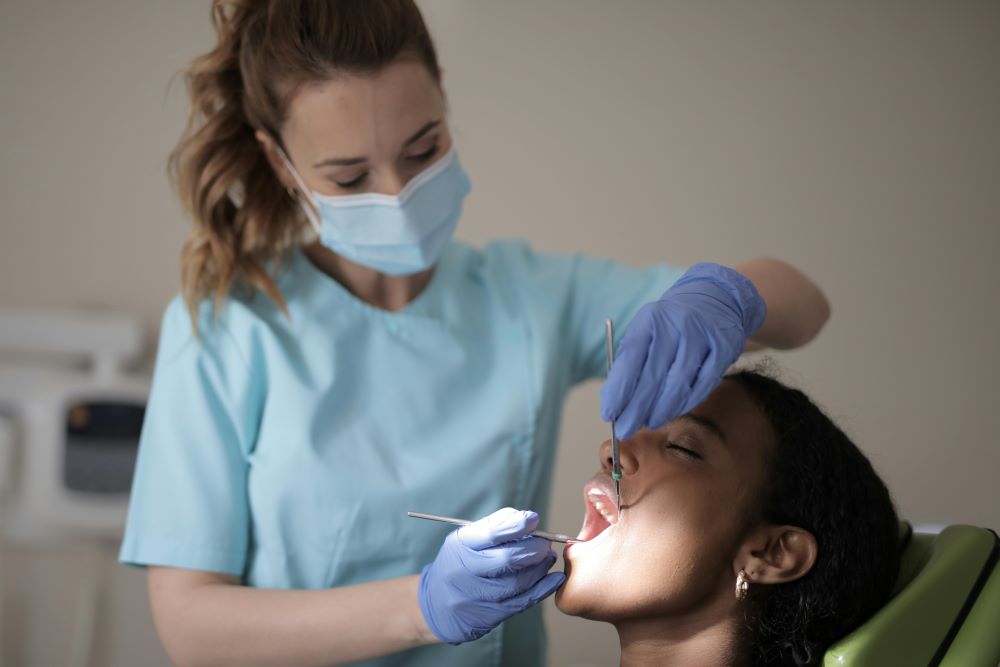
At Yonge Wellesley Dental, a gum assessment can include:
- Periodontal probing and charting to measure where your gums attach to your teeth
- Digital X-rays to see how much bone surrounds each tooth
- CBCT 3D imaging, if applicable to your case
- An intraoral camera so you can see what your dentist sees
Step 2: Treating Gum Disease When It Is Present
If gum disease is part of the problem, the first goal is to remove the infection below the gumline. Our scaling and root planing in Toronto is a deep cleaning completed over multiple visits, one section of the mouth at a time, with local anesthesia for comfort.
For more advanced cases, surgical periodontal treatment is among the options our dentists provide when your exam shows it is needed. You can read about every option on our gum disease treatment in Yonge and Wellesley page.
Step 3: Ongoing Maintenance
Gum health needs follow-up. After treatment, our clinic uses a periodontal maintenance recall schedule, with more frequent cleanings and ongoing monitoring during your exams. Periodontal care at our clinic is provided by Dr. Nerdin Medhat and Dr. Dina Numani, general dentists with periodontal training, together with our hygienists.
Can Gum Recession Be Reversed?
Can gum recession be reversed completely? Inflamed gums from early gum disease can recover when plaque and tartar are removed and daily care improves. Tissue that has already been lost is a different matter: it needs a professional plan, and your dentist will explain what is realistic for your mouth.
The most important step is the same in both cases: stop the cause so the recession does not progress.
Gum Treatment and Your Coverage
Yonge Wellesley Dental accepts patients covered by the Canadian Dental Care Plan, and we provide periodontal and gum treatments to CDCP patients, depending on CDCP authorization. Some services may be fully or partially covered, and co-payments can apply.
We explain which services are covered, review your treatment plan against your CDCP limits and give written estimates. See our CDCP dental care in Toronto page for details. For private insurance, coverage varies by plan, and third-party financing options are available.
FAQs About Gum Recession
Gum recession makes teeth look longer because more of the tooth, and sometimes the root, is showing. You may see a notch near the gumline or bigger spaces between teeth near the gums. Sensitivity to cold or brushing near the gumline is also common.
Home care cannot rebuild gum tissue that has been lost, but it can stop recession from getting worse. Use a soft-bristled brush with gentle circles, floss daily and avoid smoking. Early gum disease can be reversed with good care and professional cleanings, so book a visit to find out which stage you are at.
Start by brushing gently with a soft brush and flossing once a day, then book a dental exam. Your dentist will measure your gums, check your bone levels with X-rays and find the cause, whether that is brushing pressure, gum disease or smoking. Treatment is then matched to that cause.
See your dentist soon if your gums bleed almost every time you brush, a tooth feels loose, bad breath will not go away or your teeth suddenly become sensitive. The CDA treats a loose tooth as a serious problem that needs a dental visit as soon as possible.
It depends on the stage. Gum inflammation in early gum disease can be turned around with professional cleaning and better daily care. Gum and bone already lost to infection need specialized treatment to restore, and your dentist will explain the options after an exam.
Worried Your Gums Are Pulling Back?
If a tooth looks longer than it used to, or your gums bleed when you brush, an exam can show what is happening and why.
- Detailed gum measurements with periodontal probing, charting and digital X-rays
- Deep cleaning and surgical periodontal care in one clinic when treatment is needed
- CDCP patients welcome, with written estimates before treatment starts
Book online or visit Yonge Wellesley Dental at 32 Wellesley St. East, near Yonge and Wellesley in Toronto, to have your gums checked and start gum disease treatment in Yonge and Wellesley if you need it.