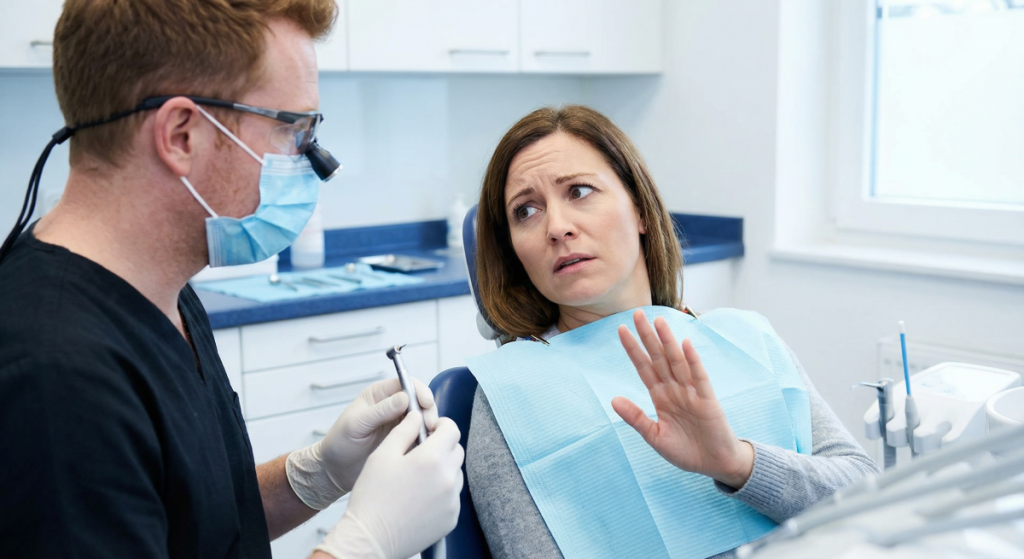
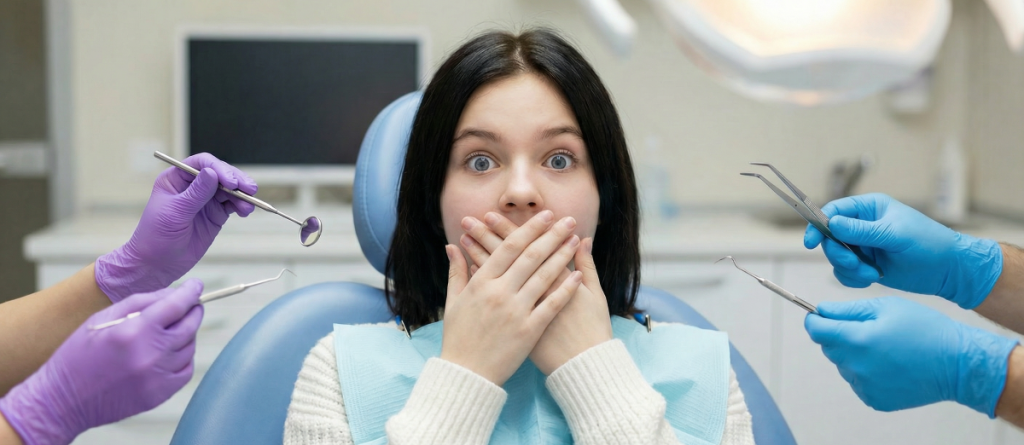
What causes dental anxiety typically involves a combination of negative past dental experiences (often occurring in childhood), a deep-seated fear of pain, fear of needles, or feelings of a loss of control. Patients suffering from this condition exhibit distinct dental phobia symptoms that are both physical and psychological, including intense panic, profuse sweating, rapid heartbeat, trouble breathing, and crying.
Left unmanaged, this intense, irrational fear of dentists (clinically termed dentophobia) leads to the avoidance of care, which directly results in severe gum disease, rampant tooth decay, and potential tooth loss.
What Causes Dental Anxiety? Recognizing Your Symptoms in Downtown Toronto
For many patients, a simple visit to the dentist feels like an insurmountable obstacle. If you find yourself avoiding routine care because of intense fear, you are experiencing a highly documented clinical phenomenon. But why is fear of dentists so common, and what exactly triggers such a profound physical and emotional response? At Yonge Wellesley Dental, situated in Downtown Toronto near Yonge St, Bay St, and Dundas Square, our approach to care begins with understanding.
By breaking down the clinical definitions, exploring the root triggers, and identifying the physiological symptoms of dental anxiety, we empower our patients to seek the care they deserve. This guide explores the science behind dental fear and how recognizing your symptoms is the first step toward reclaiming your oral health.
Recognizing the Triggers and Signs
-
Clinical Terminology: The extreme and irrational fear of dentists is medically referred to as dentophobia or odontophobia.
-
Prevalence: This fear is widespread, affecting roughly 9-20% of the population, leading to significant avoidance of necessary medical care.
-
Primary Causes: The condition is frequently rooted in negative past experiences, fear of the unknown, or specific aversions like a fear of needles.
-
Observable Symptoms: Clinical signs include a rapid heartbeat, sweating, breathing difficulties, and outright panic attacks.
-
Long-term Consequences: Avoiding the dental chair ultimately leads to severe periodontal (gum) disease and progressive tooth decay.
What is the Scientific Terminology for Fear of Dentists?
To understand how to treat a condition, it must first be properly defined. While many people use the term dental anxiety to describe a general nervousness before an appointment, the scientific terminology for the extreme, irrational fear of dentists or dental procedures is called dentophobia or odontophobia.
This is not merely a preference to be elsewhere; it is a classified phobia that triggers the body’s sympathetic nervous system. When a patient with true dentophobia is confronted with the prospect of a dental visit, their brain perceives an acute threat to their survival, releasing adrenaline and cortisol. This intense biological response explains why simple reassurance is rarely enough, and why clinical management strategies are required.
What Causes Dental Anxiety in Most Patients?
When patients ask what causes dental anxiety, the answer is rarely a single factor. Fear is usually cumulative and multifaceted. The most frequently documented clinical causes include:
- Negative Past Dental Experiences: Often originating in childhood, a previously painful, frightening, or poorly managed dental appointment leaves a lasting psychological imprint. The brain associates the sights and smells of a clinic with past trauma.
- Fear of Pain: The anticipation of pain is often worse than the actual procedure. Even with modern anesthetics, the fear that a procedure might hurt is a powerful deterrent.
- Fear of Needles (Trypanophobia): Many patients are not afraid of the dentist specifically, but are terrified of the local anesthesia injection.
- Sensory Overload: The clinical environment is filled with unique sensory inputs bright lights, the high-pitched sound of the drill, and specific chemical smells. For patients with sensory sensitivities, this environment is deeply overwhelming.
- Feelings of a Loss of Control: Lying back in a dental chair with an open mouth is inherently vulnerable. Patients often feel they cannot speak or protect themselves, leading to claustrophobia and a profound feeling of helplessness.
What Are the Clinical Dental Phobia Symptoms?
Recognizing dental phobia symptoms is essential for both the patient and the dental provider. Because dentophobia triggers a fight-or-flight response, the symptoms are largely physiological and involuntary. If you experience the following, you may be suffering from clinical dental fear:
- Cardiovascular Responses: A significantly rapid heartbeat (tachycardia) and elevated blood pressure.
- Respiratory Issues: Trouble breathing, hyperventilation, or a feeling of a tight chest.
- Dermatological Signs: Intense panic often leads to profuse sweating (diaphoresis) or sudden chills.
- Emotional Distress: Uncontrollable crying, profound dread, and severe panic attacks leading up to or during the appointment.
Can Dentists Tell If You Have Anxiety During an Exam?
A common question patients ask is whether their provider knows they are frightened.
The answer is yes. Experienced professionals performing a dental exam in Yonge and Wellesley, Toronto are trained to evaluate oral health while simultaneously observing patient behavior.
We look for physical cues such as white-knuckling the armrests, rapid breathing, and excessive sweating. By identifying these signs early, our team can immediately pivot to anxiety-management protocols, ensuring your comfort is prioritized.
What Are the Consequences of Unmanaged Dental Anxiety?
The most immediate consequence of dentophobia is the complete avoidance of dentists. Unfortunately, oral health issues do not resolve on their own. Avoidance creates a vicious cycle: the longer you stay away, the worse the condition becomes, which in turn increases the shame and fear of returning.
Clinically, this leads to severe gum disease (periodontitis), widespread tooth decay, and ultimately, potential tooth loss. When patients finally do seek care, they often require extensive Restorative Dentistry or Oral Surgery, rather than simple Preventive Dentistry like a routine cleaning.
Comparison Table: When to Monitor at Home vs. Seek Professional Treatment
Understanding your symptoms can help you decide the best path forward. Here is a clinical breakdown comparing mild nervousness with severe dentophobia.
| Clinical Feature | Mild Dental Nervousness (Monitor & Self-Manage) | Severe Dentophobia (Professional Treatment Required) |
|---|---|---|
| Physical Symptoms | Slight increase in heart rate, mild butterflies in the stomach. | Intense panic, sweating, rapid heartbeat, trouble breathing, crying. |
| Psychological State | Apprehensive but rational; able to listen to instructions. | Overwhelmed by an irrational fear; feels a complete loss of control. |
| Appointment Attendance | May delay booking but ultimately attends routine exams. | Complete avoidance of care for years, regardless of pain. |
| Oral Health Impact | Generally stable; minor issues caught early. | Severe gum disease, tooth decay, and potential tooth loss. |
| Management Approach | Deep breathing, communicating with the dentist. | Requires sedation dentistry, gradual exposure, or counseling. |
How Can You Deal With Anxiety About the Dentist?
Once you have identified what causes dental anxiety in your specific case, you can begin to manage it. Modern dentistry offers a wealth of solutions. Strategies range from behavioral coping mechanisms (like using hand signals or listening to music) to clinical interventions like sedation dentistry (including nitrous oxide and oral sedation).
For a complete breakdown of management techniques and sedation options, please read our next guide: How to Deal With Dental Anxiety: Proven Management Strategies in Yonge and Wellesley, Toronto
Taking the First Step at Yonge Wellesley Dental
If reading about dental phobia symptoms resonates with your experience, know that you are not alone, and your fear is valid. At our clinic near Yonge St, Bay St, and Dundas Square, dental exams are designed to evaluate oral health and identify concerns early, all at a pace that you completely control. You can start with just a conversation, no drills, no instruments, just a judgment-free consultation.
To learn how to approach the dentist after a long absence, read: Scared to Go to the Dentist After 10 Years? Here’s How to Start in Yonge and Wellesley, Toronto
Return to our main hub: The Ultimate Guide to Overcoming Dental Anxiety in Yonge and Wellesley, Toronto
Frequently Asked Questions (FAQs)
What causes dental anxiety in most adults?
What is the official scientific terminology for fear of dentists?
What are the most common physical dental phobia symptoms?
Why is fear of dentists so common?
What happens if I avoid the dentist because of fear?
Can dentists tell if you have anxiety during an exam?
Can a dental exam be done without causing anxiety?
Ready to Break the Cycle of Fear? Book Your Gentle Consultation Today
Do not let fear dictate your oral health any longer. Contact Yonge Wellesley Dental today to schedule a relaxed, zero-pressure consultation and experience truly compassionate care.